What are the main factor that caused the Vietnam War?
Every war may pass after a long or short period, but its pain will last forever with thousands of survivors and family. In the atmosphere of April 30 (Reunification Day) which is approaching, let’s discover the past: What caused the Vietnam War?
Table of Contents
Some information about The Vietnam War
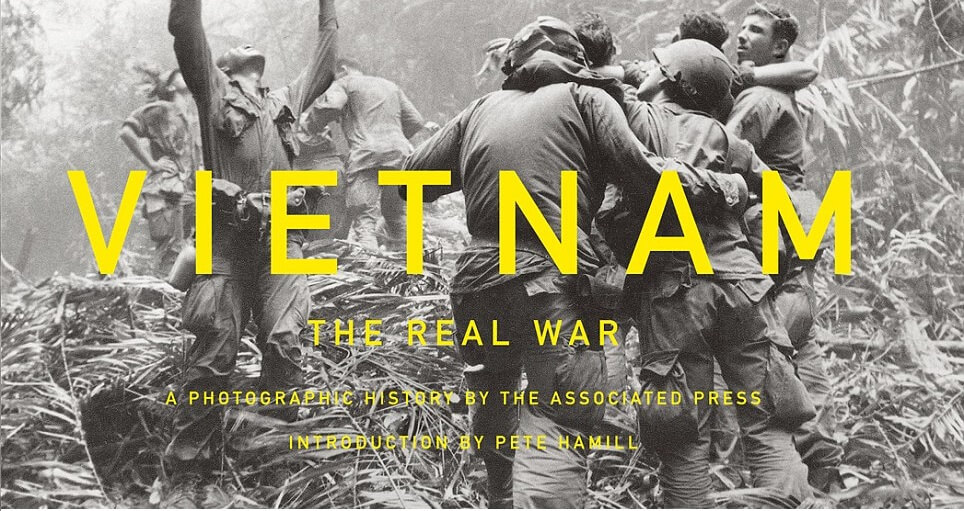
The Vietnam War (Vietnamese: Chiến tranh Việt Nam), also known as the Second Indochina War and in Vietnam as the Resistance War Against America or simply the American War, was an undeclared war in Vietnam, Laos, and Cambodia. It began from 1 November 1955 and came to the end with the fall of Saigon on 30 April 1975.
It was the second of the Indochina Wars and was officially fought between North Vietnam and South Vietnam. North Vietnam was supported by the Soviet Union, China and other communist allies meanwhile South Vietnam was supported by the United States, South Korea, the Philippines, Australia, Thailand and other anti-communist allies. The war is considered a Cold War-era proxy war from some US perspectives. It lasted some 19 years with direct U.S. involvement ending in 1973 following the Paris Peace Accords, and included the Laotian Civil War and the Cambodian Civil War, resulting in all three countries becoming communist states in 1975.
What caused the Vietnam War?
The cause of Vietnam War
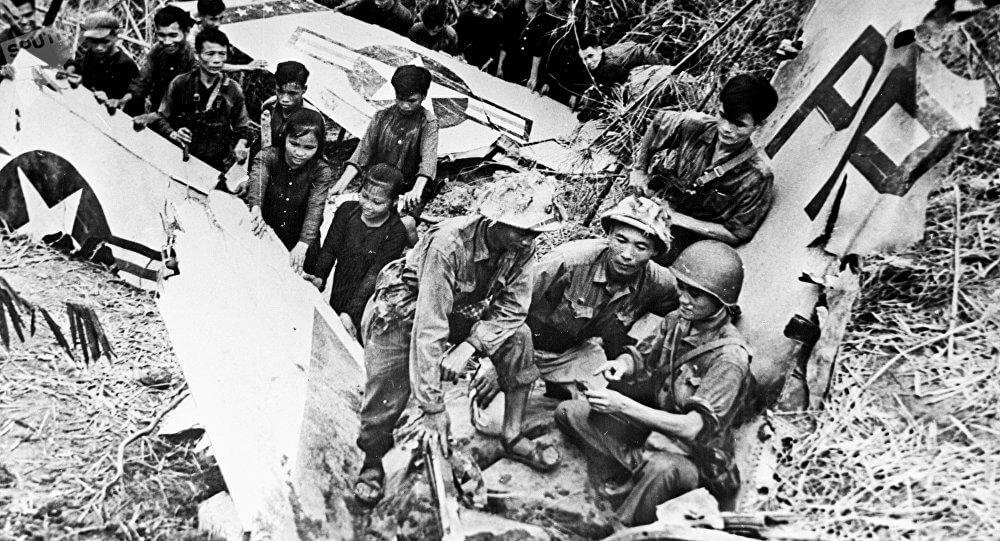
The causes of the Vietnam War were derived from the symptoms, components and consequences of the Cold War. The causes of the Vietnam War revolve around the simple belief held by America that communism was threatening to expand all over south-east Asia. In short, the Vietnam War started as a result of the U.S.’s strategy of containment during the Cold War, which aimed to prevent the spread of communism throughout the world.
Neither the Soviet Union nor the United States could risk an all-out war against each other, such was the nuclear military might of both. However, when it suited both, they had client states that could carry on the fight for them. In Vietnam, the Americans actually fought – therefore in the Cold War ‘game’, the USSR could not. However, to support the Communist cause, the Soviet Union armed its fellow Communist state, China, who would, in turn, arm and equip the North Vietnamese who fought the Americans.
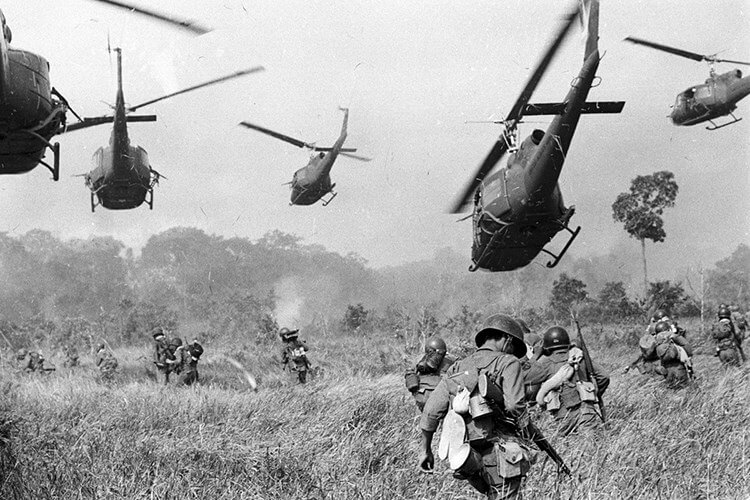
The domino theory was a Cold War era belief popular within the United States from the 1950’s until the end of the Cold War. Based on the Truman Doctrine, the theory held the idea that if Soviet communism was able to spread into a single country, then it had the potential to spread to all of the other surrounding countries. The basic idea was that the American’s needed to prevent the first domino from falling (country turning to communism) so as to prevent the spread of communism. As such, historians now argue that the United States used the Domino Theory to justify its involvement in Vietnam, just as it did in the earlier War in Korea.
The war in Vietnam was the result of years and decades of tensions within the country. For example, in the late 19th century France controlled the country as part of its colonial empire. This colonial history angered many in Vietnam and caused a growing sense of mistrust towards foreign powers. Next, Japan dominated the region in the years during World War II. After the war ended and Japan was defeated by the United States, France, with the aid of the United States, attempted to regain control over Vietnam. However, this attempt led to the rise to power of Ho Chi Minh, a communist revolutionary and the Viet Minh independence movement. As such, France was defeated at the battle of Dien Bien Phu in 1954 and North Vietnam came under the control of Ho Chi Minh and his communist forces. As well, in 1954, at a conference in Geneva, the country of Vietnam was officially divided along the 17th parallel. The northern half came under the control of communists and Ho Chi Minh. South Vietnam was controlled by Ngo Dinh Diem and was supported by western democracies such as the United States.
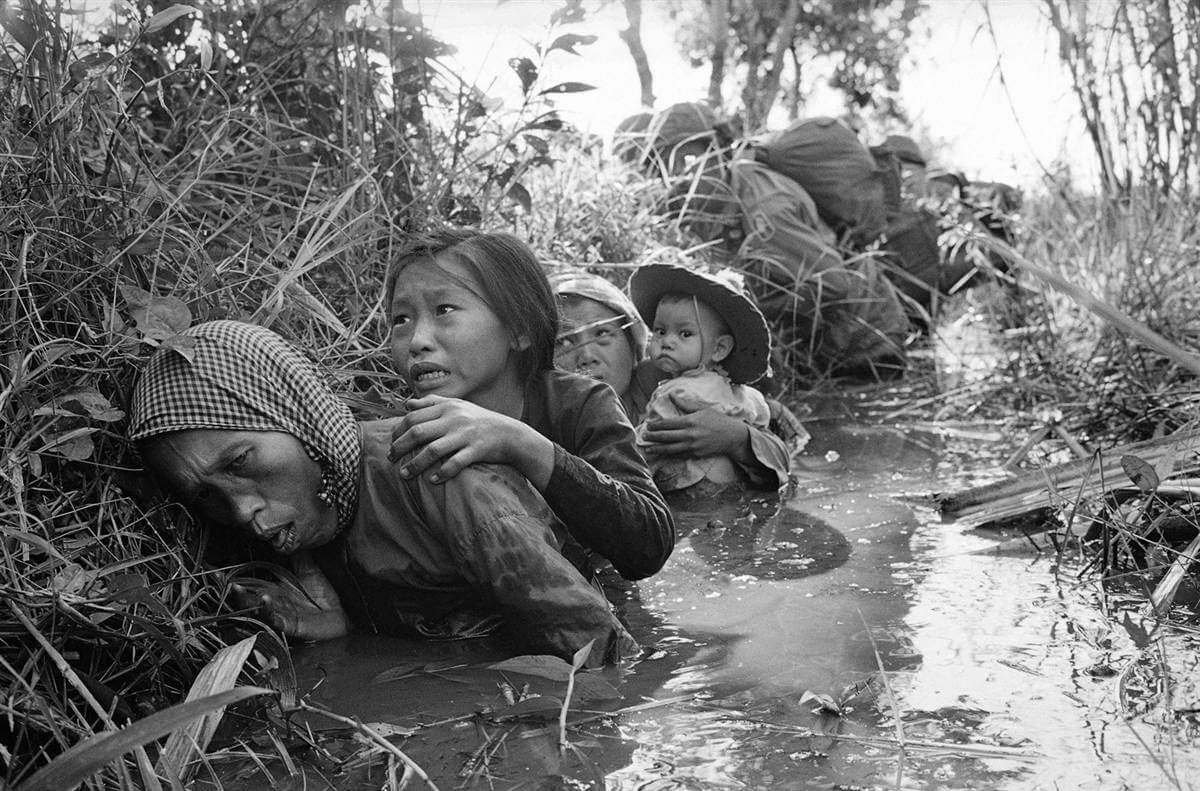
When Lyndon Johnson became president, he was determined to prevent communism from spreading into Vietnam. In fact, Robert McNamara, his Secretary of Defense, advised Johnson to try to overwhelm the communist forces of North Vietnam in order to cause their retreat. The Gulf of Tonkin incident in 1964 would ultimately see the tensions in the region rapidly increase and cause the United States to take an increased role.
The Gulf of Tonkin incident was two separate events in August, 1964 where the United States claimed that it’s naval forces operating in the waters of the gulf had been attacked by Vietnamese torpedo boats.
- The first was on August 2nd, when the USS Maddox was patrolling the Gulf of Tonkin and was followed by three Vietnamese torpedo boats. The ships engaged in a short firefight in which the USS Maddox damaged the torpedo boats, while escaping with only a single bullet hole.
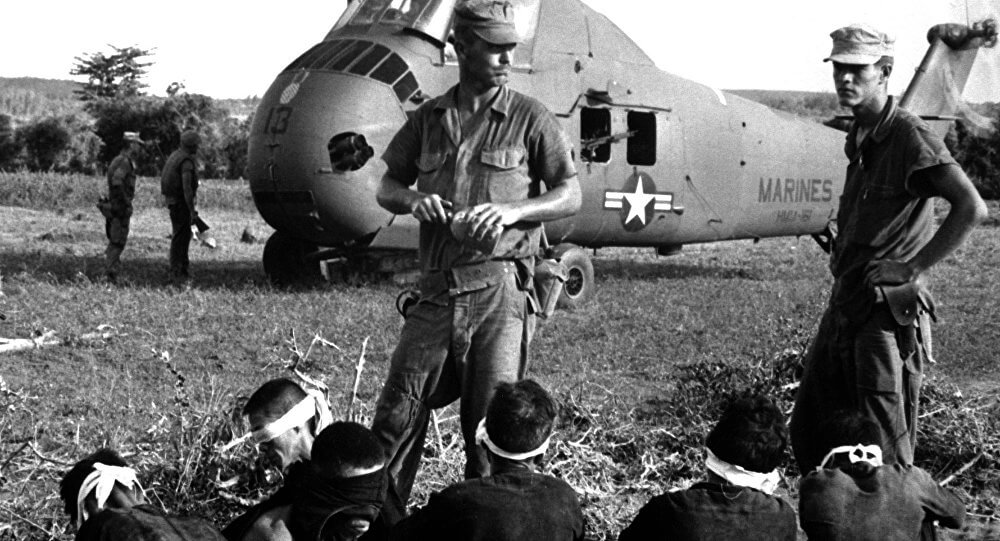
- The second incident was said to have occurred two days later on August 4th. Again, it was suggested that Vietnamese ships and United States ships engaged in sea battle. However, both Gulf of Tonkin incidents have been called into question by historians. For example, it is now generally understood that the August 4th incident did not take place and was the result of a false radar reading by the Americans. Regardless, these incidents would be pivotal in the escalation of American involvement in Vietnam and the eventual Golf of Tonkin Resolution, which was passed by Congress, and allowed Lyndon Johnson to begin delivering American forces into the country.
Vietnam before World War Two
Before World War Two, Vietnam had been part of the French Empire. During the war, the country had been overrun by the Japanese. When the Japanese retreated, the people of Vietnam took the opportunity to establish their own government lead by Ho Chi Minh. However, after the end of the war, the Allies gave back South Vietnam to the French while the north was left in the hands of the non-communist Chinese. The Nationalist Chinese treated the North Vietnamese very badly and support for Ho Chi Minh grew. He had been removed from power at the end of the war. The Chinese pulled out of North Vietnam in 1946 and the party of Ho Chi Minh took over – the Viet Minh.
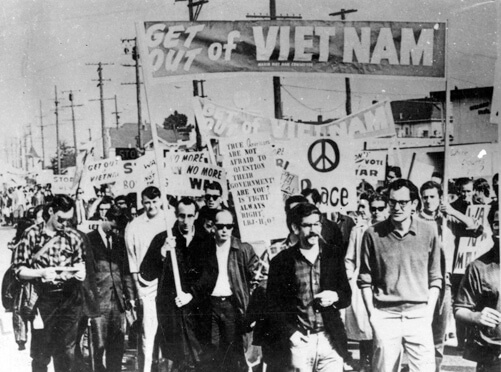
Vietnam after World War Two
In October 1946, the French announced their intention of reclaiming the north which meant that the Viet Minh would have to fight for it. The war started in November 1946, when the French bombarded the port of Haiphong and killed 6,000 people. The French tried to win over the people of the North by offering them ‘independence’. However, the people would not be allowed to do anything without French permission. A new leader of the country was appointed called Bao Dai. The Russians and Eastern Europe refused to recognize his rule but they claimed that Ho Chi Minh was the real ruler of Vietnam.
The French had got themselves into a difficult military position. In spite of huge American help, the French could not cope with the Viet Minh’s guerrilla tactics. The Viet Minh were by now receiving help from Communist China – Mao Zedong had taken power of China in 1949. The fact that two opposing sides had developed was classic Cold War history. The country was meant to be ruled by Bao Dai who was supported by the west. Ho Chi Minh was supported by the Russians, Chinese and Eastern Europe – all communist.
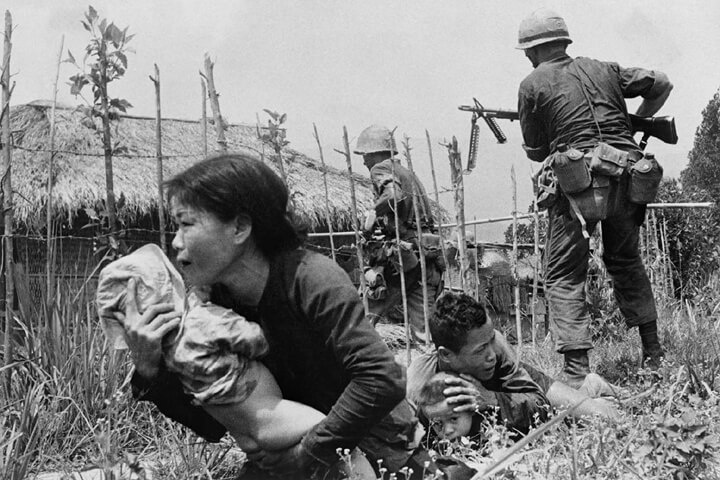
In November 1953, the French sent men from their crack Parachute Regiment to Vietnam. It was naturally assumed by the French that this unit would defeat the untrained Viet Minh guerrillas. They were sent to Dien Bien Phu in the north. In May 1954, the regiment was attacked by the North Vietnamese and surrendered, which came as a terrible blow to the French people. The French pulled out of Vietnam in the same month.
Vietnam divides into North and South
In April 1954, the world’s powers had met at Geneva to discuss Vietnam. In July 1954, it was decided to divide the country in two at the 17th parallel. Bao Dai was to lead the south and Ho Chi Minh the north. The meeting also decided that in 1956, there would be an election in both the north and south to decide who would rule the whole country. The election would be supervised by neutral countries. This election did not take place and the split had become permanent by 1956.
North Vietnam had a population of 16 million. It was an agricultural nation. The Viet Minh trained guerrillas to go to the south to spread the word of communism. Their weapons mostly came from communist China. To the surprise of the South Vietnamese, those Viet Minh who went to the south helped them on their farms and did not abuse them. They had become used to fearing soldiers. Instead, the Viet Minh were courteous and helpful.
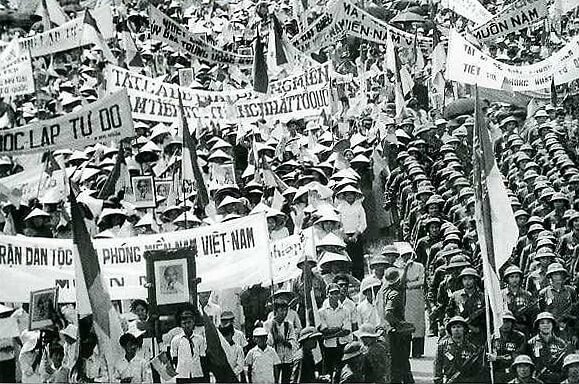
South Vietnam also had a population of 16 million. Its first proper leader was Ngo Dinh Diem who was a fanatical Catholic. As communism hated religion, Diem hated all that communism stood for. This is why he got America’s support – he had a poor record on human rights but his rule was in the era of the “Domino Theory” and anybody who was anti-communist in the Far East was likely to receive American backing – regardless of their less than savoury background. Ngo ruled as a dictator along with his brother – Ngo Dinh Nhu. Their government was corrupt and brutal but it was also backed by America.
After the non-election of 1956, the Viet Minh became more active militarily. Their guerrillas – now called the Viet Cong – attacked soft targets in the south. They used the Ho Chi Minh Trail which was a 1000 mile trail along the border with Laos with heavy jungle coverage so that detection from the air was very difficult. The Viet Cong were trained by their commander Giap who learned from the tactics used by the Chinese communists in their fight against the Nationalist Chinese forces. He expected his troops to fight and to help those in the south. He introduced a “hearts and minds” policy long before the Americans got militarily involved in Vietnam.
The End of the War and Its Legacy
U.S. combat involvement ended with the Paris Peace Accords in January 1973. The last American troops withdrew. Two years later, on April 30, 1975, North Vietnamese tanks rolled through the gates of the Presidential Palace in Saigon. The Republic of South Vietnam ceased to exist. On July 2, 1976, the country was formally reunified as the Socialist Republic of Vietnam.
The war’s legacy shaped everything that came after. For Vietnam, it meant decades of international isolation, economic hardship, and the enormous work of physical and psychological reconstruction. For the United States, it produced a political and cultural trauma that still reverberates — in debates about military intervention, in the design of the Vietnam Veterans Memorial in Washington, in the films and novels that have never stopped trying to make sense of it.
What makes the story remarkable is what came next. Vietnam normalized relations with the United States in 1995. Today the two countries have a warm strategic partnership. American tourists flock to the War Remnants Museum in Ho Chi Minh City and the Cu Chi Tunnels, then eat bánh mì and drink Vietnamese iced coffee five minutes later. The Vietnamese people, who suffered most of all, made a deliberate choice to build rather than brood — and the country they built in the decades since is one of the most compelling destinations in the world.
Visiting the Sites of the Vietnam War Today
For travelers with an interest in history, Vietnam offers some of the most powerful war heritage experiences anywhere on earth:
War Remnants Museum, Ho Chi Minh City — Unflinching documentation of the conflict from the Vietnamese perspective. Essential viewing, though emotionally demanding.
Cu Chi Tunnels, outside Ho Chi Minh City — The extraordinary underground network used by NLF fighters during the war. You can crawl through sections of the tunnels.
Demilitarized Zone (DMZ), Quảng Trị Province — The former 17th parallel border, with bunkers, craters, and memorials still visible across the landscape.
Hỏa Lò Prison (“Hanoi Hilton”), Hanoi — The colonial-era prison that held American POWs, including John McCain. Now a museum covering both its French colonial and wartime history.
Điện Biên Phủ, northwest Vietnam — The battlefield where France’s colonial ambitions ended in 1954. The hill positions, French bunkers, and Vietnamese war cemeteries make it one of the most atmospheric historical sites in Southeast Asia.
All of these sites are accessible with a standard Vietnam e-visa — apply online, approved in approximately 3 business days, and ready on your phone when you land.
Getting Your Vietnam Visa
For travelers planning a visit to Vietnam from anywhere in the world — including those based in or traveling through Pyongyang — the Vietnam e-visa is the straightforward choice. It’s 100% online, costs USD $25, and grants 90 days of stay on a single or multiple-entry basis. No embassy visit, no approval letter system, no queues.
Citizens of South Korea, Japan, Russia, and most European countries are exempt from the Vietnam e-visa requirement and can enter for 45 days with just a valid passport. For all other nationalities, the online application takes about 20 minutes to complete correctly.
Need it fast? The Super Urgent service processes new applications through priority channels in 2–4 hours — useful if your travel date is imminent.
📌 Apply at: visaonlinevietnam.com 💬 WhatsApp: (+84) 968 18 77 18
💡 Expert Insight from Stanley Ho: “Over my 23+ years handling travel logistics and Vietnam visa services, the most frequent disruption occurs at the check-in desk due to simple application formatting errors. If you are stuck at the airport and denied boarding, don’t panic — our emergency team can secure a new E-visa clearance through priority channels within hours, saving your flight.”
Frequently Asked Questions
What was the main cause of the Vietnam War? There was no single cause — the war emerged from the intersection of Cold War ideology, unresolved Vietnamese nationalism after French colonial rule, the failure of the 1954 Geneva Accords elections, the weakness of the South Vietnamese government, and American strategic miscalculation. The most fundamental cause, at its core, was the U.S. decision to treat a Vietnamese independence struggle as a front in the global Cold War, and to support a South Vietnamese government that lacked genuine popular legitimacy.
How long did the Vietnam War last? The Vietnam War lasted approximately 20 years, from November 1, 1955, to April 30, 1975. Direct U.S. military involvement peaked between 1965 and 1973, ending formally with the Paris Peace Accords in January 1973.
How many people died in the Vietnam War? Estimates vary widely, but most historians put Vietnamese military and civilian deaths at between 2 and 3.5 million. Approximately 58,220 American service members were killed. South Korean, Australian, and other allied forces also suffered significant casualties.
Why did the United States lose the Vietnam War? The U.S. military was never defeated in the conventional sense — it won virtually every major battle it fought. But military victory couldn’t substitute for political legitimacy. The South Vietnamese government never achieved the popular support needed to sustain itself without American backing. When American domestic support for the war collapsed after Tết 1968 and Congress cut funding for South Vietnam in 1974, the strategic foundation simply wasn’t there.
Is Vietnam safe for historical tourism today? Absolutely. Vietnam is one of Southeast Asia’s safest and most welcoming destinations. The war sites are well-maintained, locally guided, and approached with remarkable thoughtfulness by the Vietnamese people who lived through it. American, South Korean, and Australian visitors — whose countries fought in the war — receive the same warm reception as anyone else.
April 30th anniversary
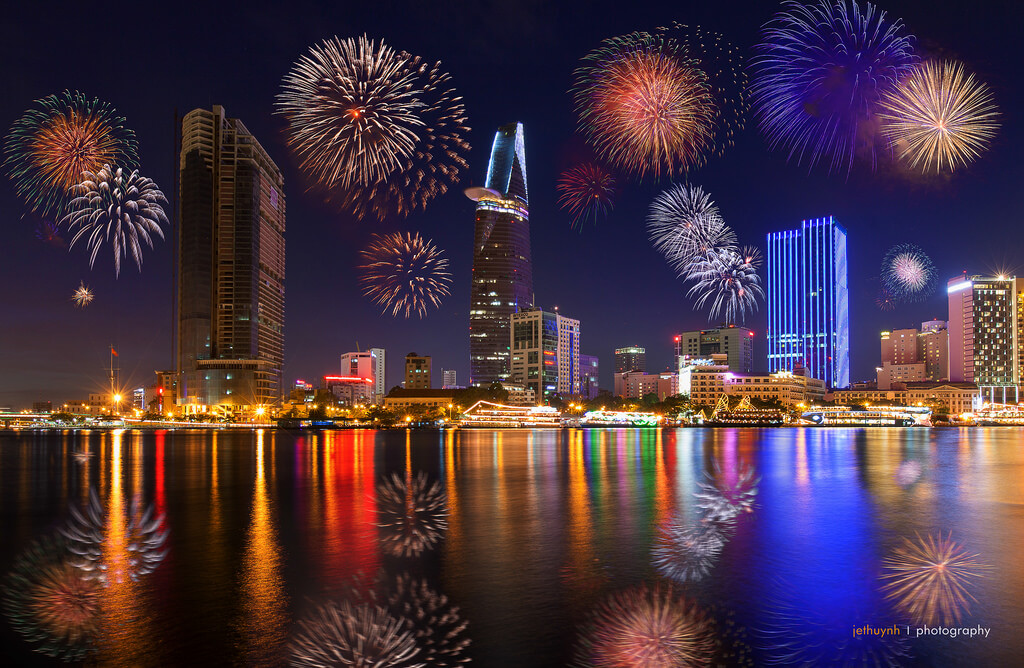
April 30th, 1975 is the day that marks the fall of Saigon government, ending the Vietnam War and leading to the liberation of Vietnam’s southern part. To celebrate the victory of Vietnam in Vietnam War, and the liberation of South Vietnam, Vietnamese people held Vietnam Reunification Day celebration. This is one of important holidays of Vietnam, which recalls victorious history of Vietnamese people.
All Vietnamese people are off from work to celebrate the important national event. Great music shows are performed with victorious songs. All houses are required to hang Vietnamese flag in front of their door and city streets are lighted up with red banners and flags.
Ho Chi Minh City (also called Sai Gon) officials have announced the City will hold firework exhibitions in four venues for fifteen minutes beginning at 9pm on April 30 to celebrate Reunification Day.

Comments are closed.